You've found two 16-channel studio audio mixers with Bluetooth and USB that look identical. One is priced at $164.09, the other at $110.85. The question is whether you should pay $53.24 more for essentially the same on-paper specifications.
In music audio production, a 16-channel mixer gives you plenty of inputs for microphones, line sources, and external processors. Bluetooth and USB let you bring in music from a phone, tablet, or computer. When the channel count and features are the same, the price difference becomes the key decision point.
Quick Verdict
Choose the $110.85 version for the same stated feature set. Both are "16 Channel Studio Audio Mixer Bluetooth USB Digital Sound Mixing Console Board" options with 16 channels, a frequency response of 20Hz to 30kHz, crosstalk above 85dB at 1kHz, and a tabletop metal body. Since the specifications match, the lower-priced version is the straightforward choice.
Comparison Table
| Feature | 16-Channel Mixer (USD 164.09) | 16-Channel Mixer (USD 110.85) |
|---|---|---|
| Listed price | $164.09 | $110.85 |
| Channels | 16 | 16 |
| Frequency response | 20Hz-30kHz ±0.5dB | 20Hz-30kHz ±0.5dB |
| Crosstalk (1kHz) | >85dB | >85dB |
| Condition | New | New |
Where Each Option Wins
The $110.85 option wins on price. The $164.09 option lists the same 16 channels, the same Bluetooth and USB connections, and the same frequency response. Neither option has a stated advantage in input types or output connections, so the meaningful difference is the price tag.
The $164.09 option includes a 10-segment LED main level meter and a metal tabletop body, but the $110.85 option lists the same design features. That makes the lower-priced mixer the sensible pick for buyers who want the full 16-channel feature set.
Product Notes
16 Channel Studio Audio Mixer Bluetooth USB Digital Sound Mixing Console Board (USD 164.09)
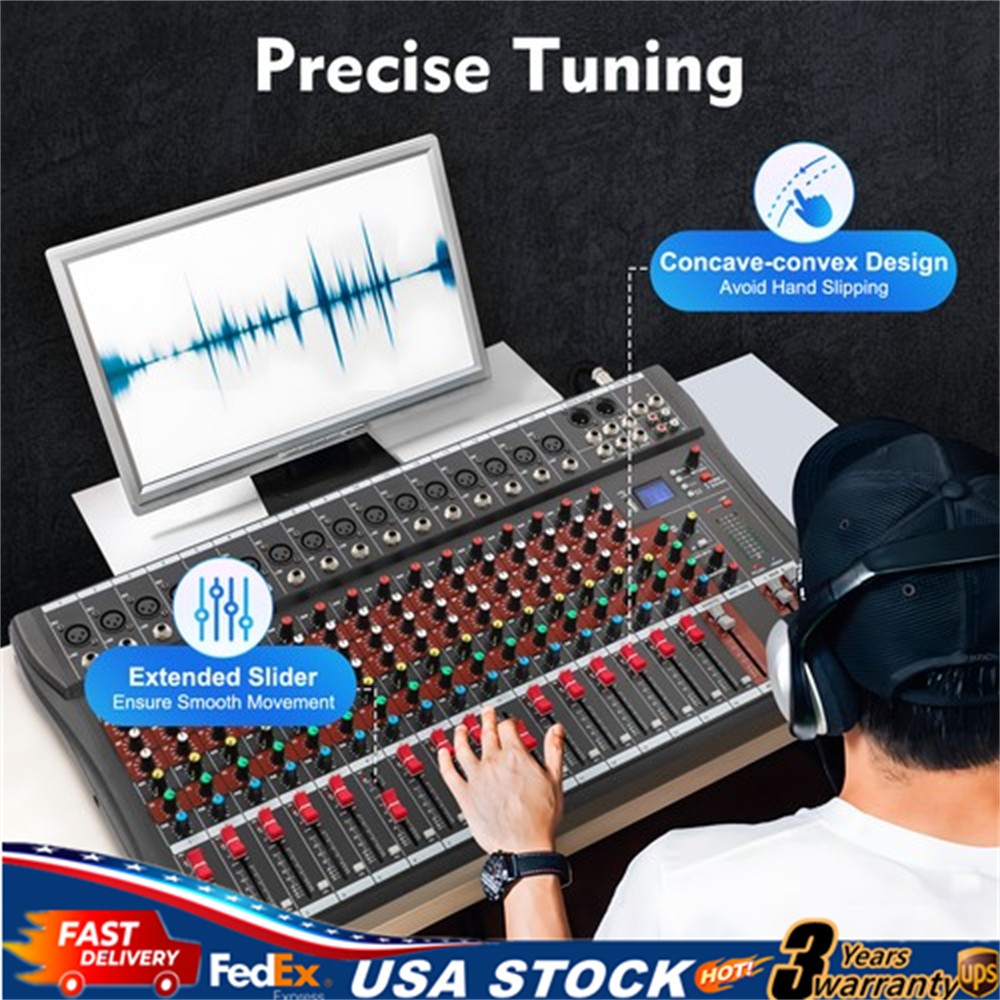
This is the higher-priced version of the same 16-channel mixer. It comes with the identical listed specifications: 16 channels, a frequency response of 20Hz to 30kHz, and crosstalk above 85dB. If you choose this one, you're getting the same mixer design as the lower-priced option, with a 10-segment LED level meter and Bluetooth/USB connectivity. The mixer is tabletop-friendly and easy to operate, matching the lower-priced unit's layout. The main limitation is that you pay $53.24 more without any stated extra channel, input, output, or feature. Unless you have a specific reason to order the $164.09 version, this higher price is not supported by a different spec sheet.
16 Channel Studio Audio Mixer Bluetooth USB Digital Sound Mixing Console Board (USD 110.85)
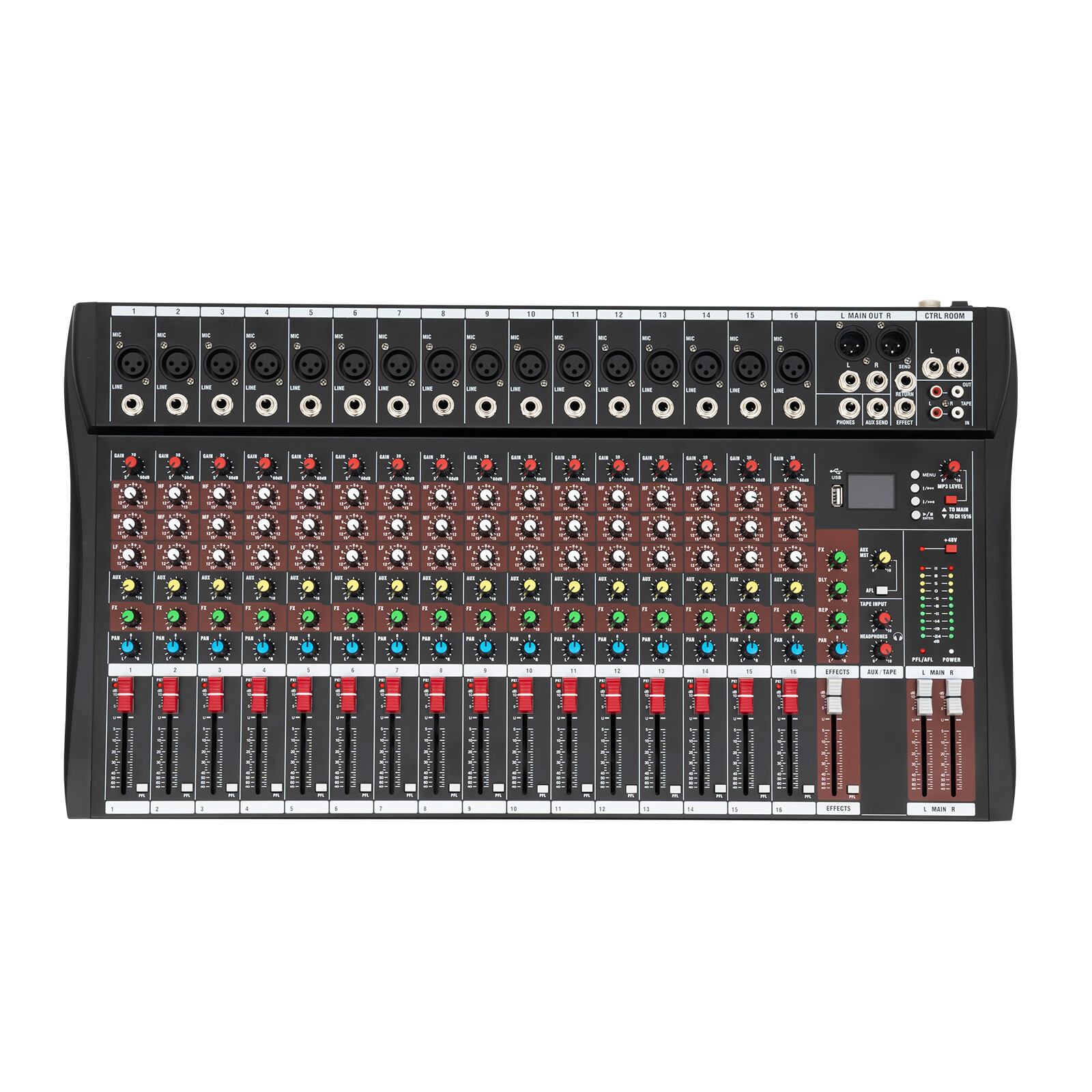
This is the lower-priced version, and it has the same 16-channel configuration, Bluetooth, USB, and frequency response as the $164.09 version. It also lists the same metal tabletop body and 10-segment LED meter. For a home studio or podcast rig, 16 channels leave room for multiple mics and external gear. The reason to choose it is simple: you get the same stated mixer specs for $53.24 less. The limitation is that you are not gaining any additional inputs or outputs compared to the costlier option. If the specs are what matter, this is the one that makes financial sense.
Final Choice by Use Case
If you're building a music audio production setup and need a 16-channel mixer with Bluetooth and USB, the $110.85 option is the one to pick. It gives you the same channel count, frequency response, and connectivity as the $164.09 version. For someone who simply wants that configuration and doesn't need a separate reason to spend more, the lower-priced mixer is the clear final choice.