When you are starting out in automotive repair, the biggest decision is not which wrench to buy-it is which reference will actually help you understand how modern vehicles work and how to fix them. You need something that covers the full range of inspection, maintenance, and repair procedures without drowning you in theory. The question becomes: which textbook gives you practical, well-structured knowledge for the money?
Quick Verdict
Tim Gilles' Automotive Service: Inspection, Maintenance, Repair is a substantial hardcover reference from Cengage Learning. At USD 23.90 for a Very Good copy, it offers a deep, 1,632-page treatment of automotive technology and service procedures. This is a strong choice if you need a broad, college-level resource that will stay relevant through a full training program or early career.
Who It Suits
This book is best for learners enrolled in an adult or further education automotive program, or for self-study readers who want a thorough alternative to skimpy repair manuals. Its educational-level positioning and format suggest it was built as a course companion. If you are preparing for a career as a service technician, the scope of inspection and maintenance topics is well aligned with day-to-day shop work.
What Stands Out From the Listed Details
The most obvious strength is depth. With 1,632 pages in a revised hardcover edition, this is not a quick overview. It covers technical aspects of automotive service, which maps directly to the kind of diagnostic and repair knowledge a technician uses. The publication year is 2015, so it reflects the era's vehicle systems without being outdated in the fundamentals.
Another practical point: the copy is listed as Very Good. For a used hardcover at USD 23.90, that gives you a solid study copy at a manageable price for a major textbook. It is written in English and published in the United States, so it aligns closely with U.S. vehicle service conventions and terminology.
Meaningful Trade-Offs
Because it is a textbook rather than a quick reference, it is heavy and dense. You will not want to carry it to a workspace for a quick belt replacement. Its 2015 publication date means it will not cover the latest hybrid or electric vehicle platforms in detail, so you may need a supplementary source for the newest models. Also, the textbook format is better for structured learning than for step-by-step repair tasks on a specific make and model.
The hardcover binding is durable for repeated use, but the size makes it a desk or bench reference, not a glovebox guide.
Bottom Line
If you are an aspiring automotive technician or a student in a repair training program, Automotive Service: Inspection, Maintenance, Repair gives you a comprehensive foundation in the language and procedures of the trade. Its breadth and depth are ideal for studying the full maintenance and repair process, and the listed price is reasonable for a reference you will use for years.
For someone who wants a narrow workshop manual for a specific vehicle, this is not that. But for building long-term technical knowledge, it is a practical investment.
Automotive Service: Inspection, Maintenance, Repair
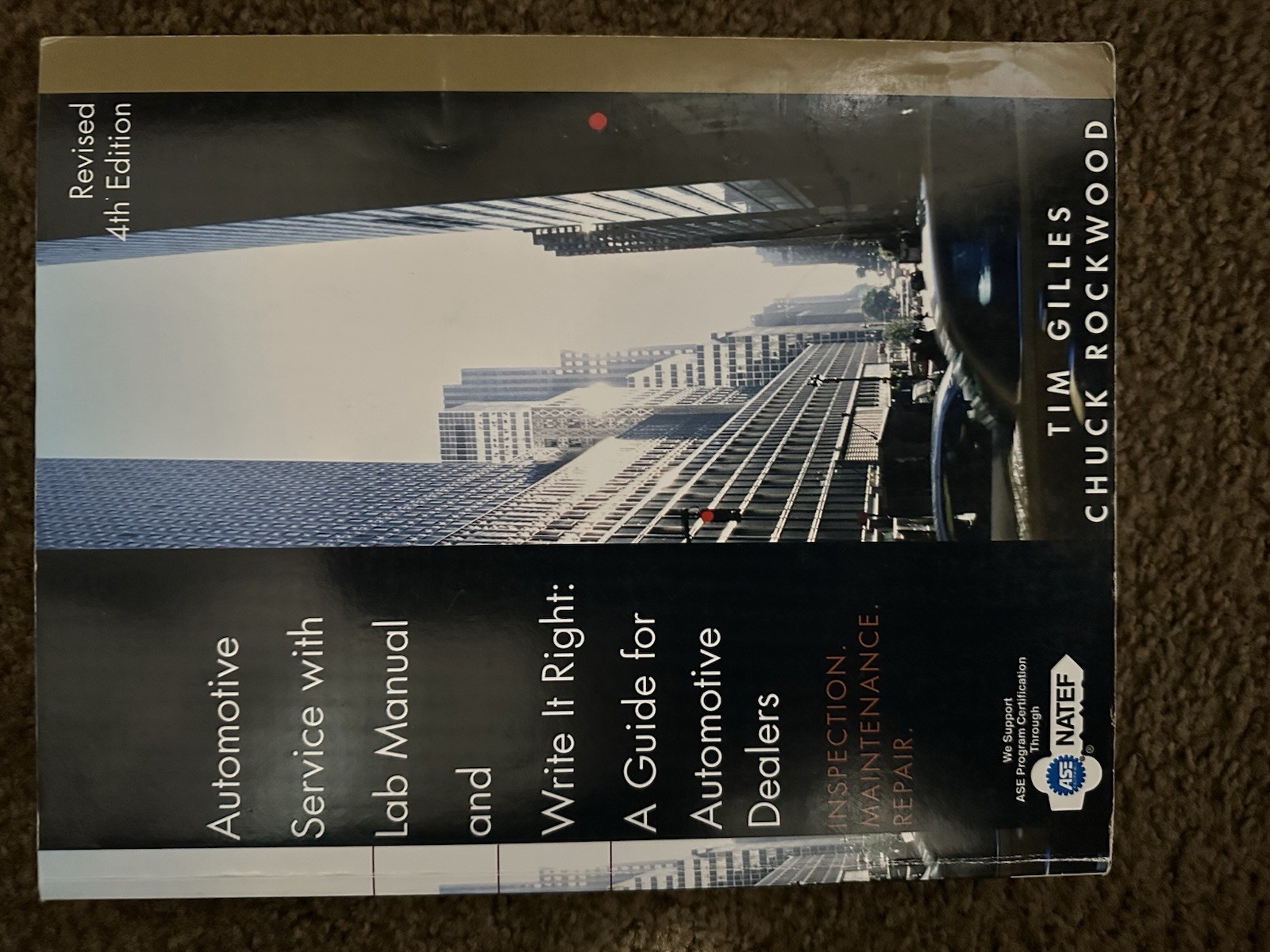
The listing presents a Very Good hardcover copy from the Mindtap Course List series, authored by Tim Gilles and published by Cengage Learning in 2015. It contains 1,632 pages, features a revised format, and includes an ISBN of 9781305110595. The price is USD 23.90.
The strongest reason to choose this particular textbook is the sheer amount of integrated content: inspection, maintenance, and repair topics are woven together, which mirrors the way a working technician actually approaches a car. You learn not just the procedure, but the reasoning behind it.
The limitation is its age. Published in 2015, it cannot address the most recent electronic systems and electrified drivetrains. You will need to complement it with current service information for newer vehicles. Even so, the core mechanical and electrical principles remain a valuable foundation.
For a learner on a budget, a Very Good hardcover at this price level is a practical way to build a professional-grade library without overspending.