Building a music audio production setup means deciding where every dollar goes, and the mixer is one of the first big calls. Right now, two listings are competing for your attention with the same product name: 16 Channel Studio Audio Mixer Bluetooth USB Digital Sound Mixing Console Board. The feature attributes match on both sides, so the visible decision point is the listed price gap. Which listing deserves your budget?
Quick verdict
Both listings describe the same mixer and share the same core attributes. The real difference is how the listing text is written: one keeps it feature-oriented, the other spells out the full technical specification. If you want the lower listed price, the shorter-detail listing is the simpler choice. If you want the extra written specification detail, the higher-priced listing gives you that.
Comparison table
| Feature | Lower-priced listing | Higher-priced listing |
| Listed price | USD 96.99 | USD 110.85 |
| Channel count | 16 channels | 16 channels |
| Bluetooth and USB | Present | Present |
| Condition | New | New |
| Crosstalk (1kHz) | >85dB | >85dB |
| Frequency response | 20Hz-30kHz ±0.5dB | 20Hz-30kHz ±0.5dB |
| Description style | Feature-focused | Full spec list |
Where each listing stands out
The lower-priced listing is the straightforward pick when you want the same mixer name and core feature set without spending extra. The higher-priced listing is the one to read when you want the written spec sheet to confirm the mixer works for your setup; it covers the corded power source, US-standard adapter, max input and output levels, THD+N, noise, and main level meter.
Product notes
16 Channel Studio Audio Mixer Bluetooth USB Digital Sound Mixing Console Board (lower listed price)
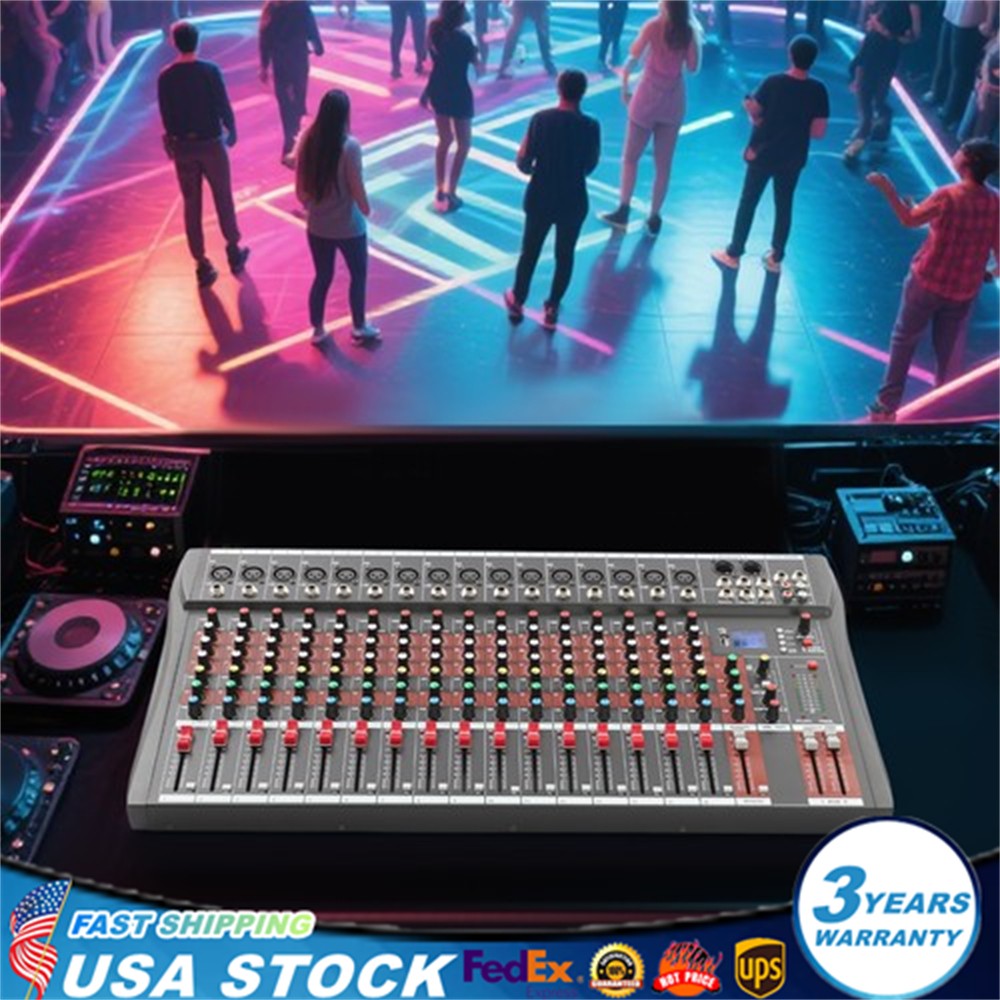
This listing is the one to choose when price is the deciding factor. It carries the same product name and same shared feature attributes as the other listing, and the write-up leads with what matters during everyday use: the three-band equalizer, durable metal construction, and powder-coated surface. That framing makes it easy to imagine how the mixer behaves for vocals and music in a music audio production setup. The limitation is that the specification detail is less complete in the listing text. If you want to double-check values like adapter output or distortion before buying, the higher-priced listing is where those numbers are written out. For now, this listing wins on cost.
16 Channel Studio Audio Mixer Bluetooth USB Digital Sound Mixing Console Board (higher listed price)
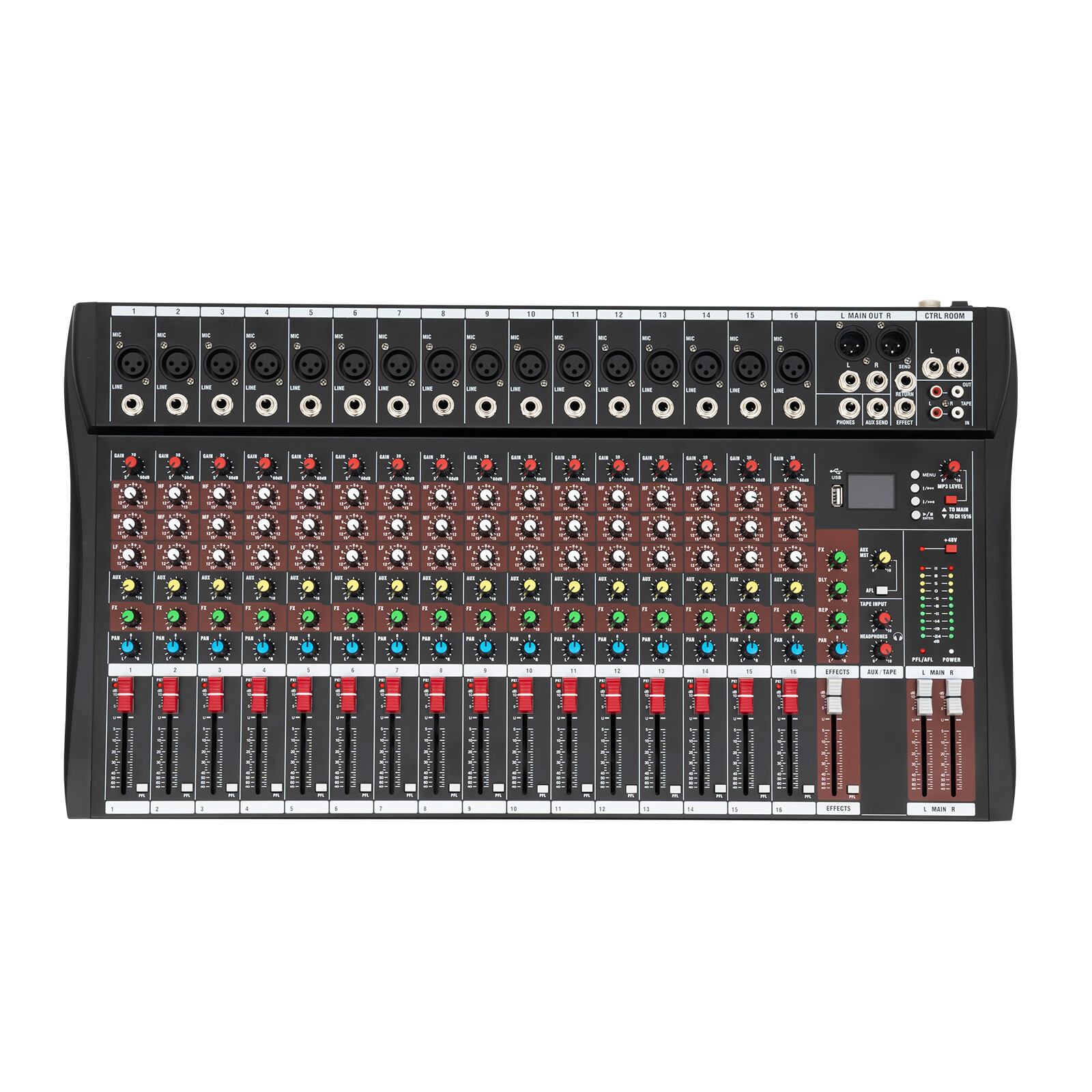
Choose this listing when the written specification sheet matters more than the extra cost. The listing text lays out the corded US-standard adapter input and output, maximum input and output levels, frequency response, THD+N, noise, and crosstalk, so you can check compatibility without hunting for details elsewhere. For a music audio production setup, that level of written detail can make the buying decision easier. The limitation is the higher listed price; you are paying more for the same mixer name and shared feature set. If the lower-priced listing already tells you everything you need, there is no functional reason in the listing text to spend more.
Final choice by use case
If your goal is to stay at the lower listed price and the feature summary is enough, go with the listing at USD 96.99. If you want the full technical specification written out in the listing and the higher cost fits, go with the listing at USD 110.85.