Choosing a 16-channel mixer for music audio production usually comes down to channel count, connectivity, and the price you are willing to pay. When four listings carry the same board name and the listed prices run from $104.07 to $120.85, the practical difference is in the description each listing leads with. All four are new 16-channel Bluetooth/USB mixing consoles, but one leans on a technical spec sheet while the others tell a feature-and-materials story. This guide sorts through the four so you can decide which listing fits your workflow.
Quick take
All four listings describe a 16-channel desktop mixer with Bluetooth and USB connections. The shared basics include a three-band equalizer in the feature-focused entries, a crosstalk figure above 85dB in most of them, and metal-based construction language. The clearest split is price and emphasis. The lowest-priced listing gives you the most granular spec list, the middle listing reuses the feature-focused wording at a moderate price, and the two top-priced listings offer the same feature story with slightly different attribute tags.
Listed price comparison
| Listing | Listed price | Price bar | Standout detail |
|---|---|---|---|
| 16 Channel Studio Audio Mixer (Bluetooth/USB) | USD 104.07 | Full spec sheet, new condition | |
| 16 Channel Studio Audio Mixer (Bluetooth/USB) | USD 110.87 | Three-band EQ wording at a middle price | |
| 16 Channel Studio Audio Mixer (Bluetooth/USB) | USD 120.85 | Three-band EQ, powder-coat finish | |
| 16 Channel Studio Audio Mixer (Bluetooth/USB) | USD 120.85 | Adds metal+plastic material note |
Decision matrix
- Choose the spec-focused listing if you want to read frequency response, input levels, and noise numbers before buying.
- Choose the middle-priced listing if the three-band EQ feature story matters and you want to avoid the top listed price.
- Choose one of the two top-priced listings if the feature-focused description is more important to you than the price difference.
Product notes
16 Channel Studio Audio Mixer - spec-focused entry
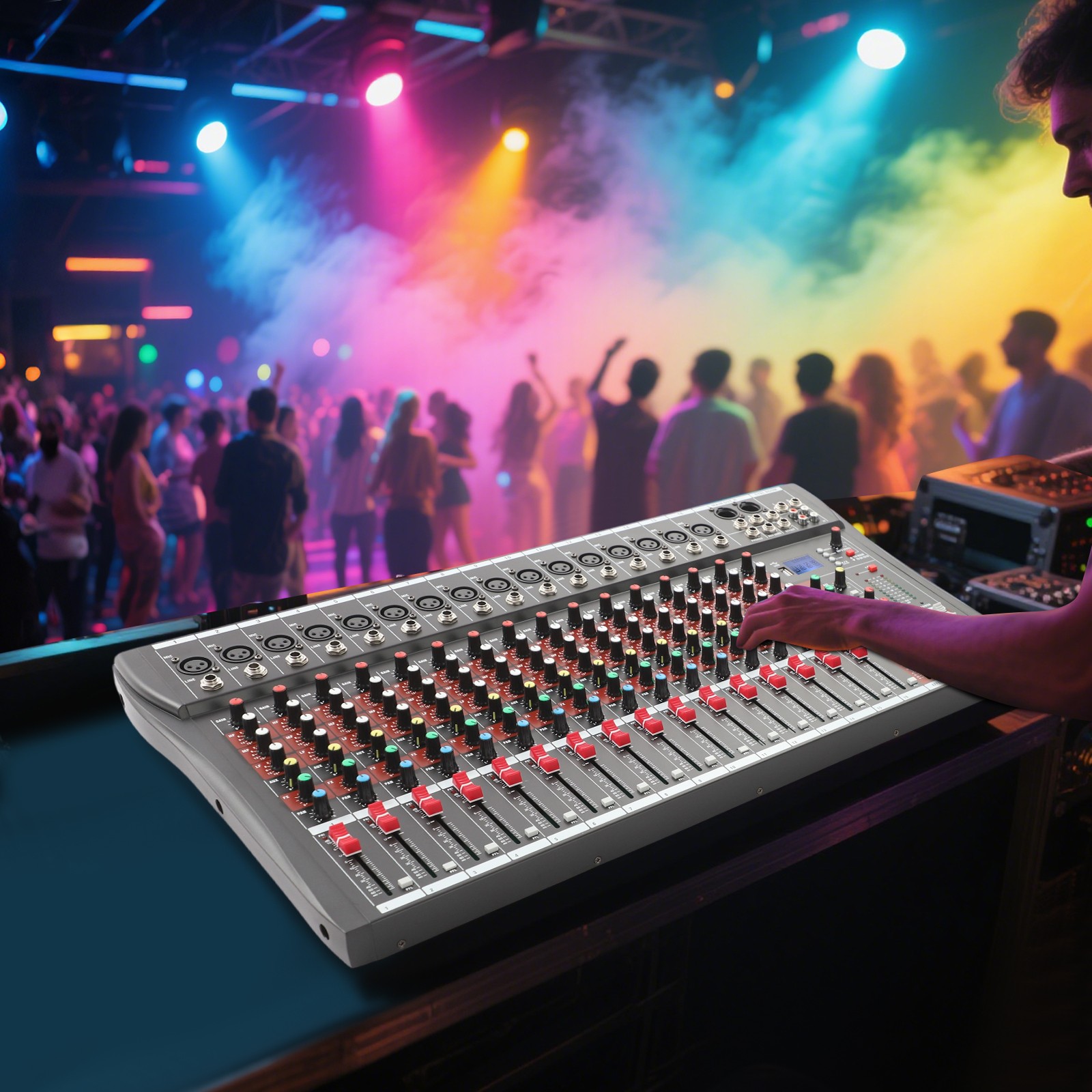
This listing is the lowest-priced of the four and the one that reads like a technical data sheet. It spells out 16 channels, frequency response of 20Hz-30kHz ±0.5dB, max input level +24dBu, and crosstalk above 85dB. If you like to see concrete numbers before choosing a mixing console, this is the entry to start with. The condition is listed as new, and the adapter range covers AC100-240V. The trade-off is that the description leans toward technical detail rather than the three-band equalizer and powder-coating story found in the other entries. You get fewer feature-story flourishes in exchange for the lower listed price.
16 Channel Studio Audio Mixer - feature-focused entry at the top price (first)
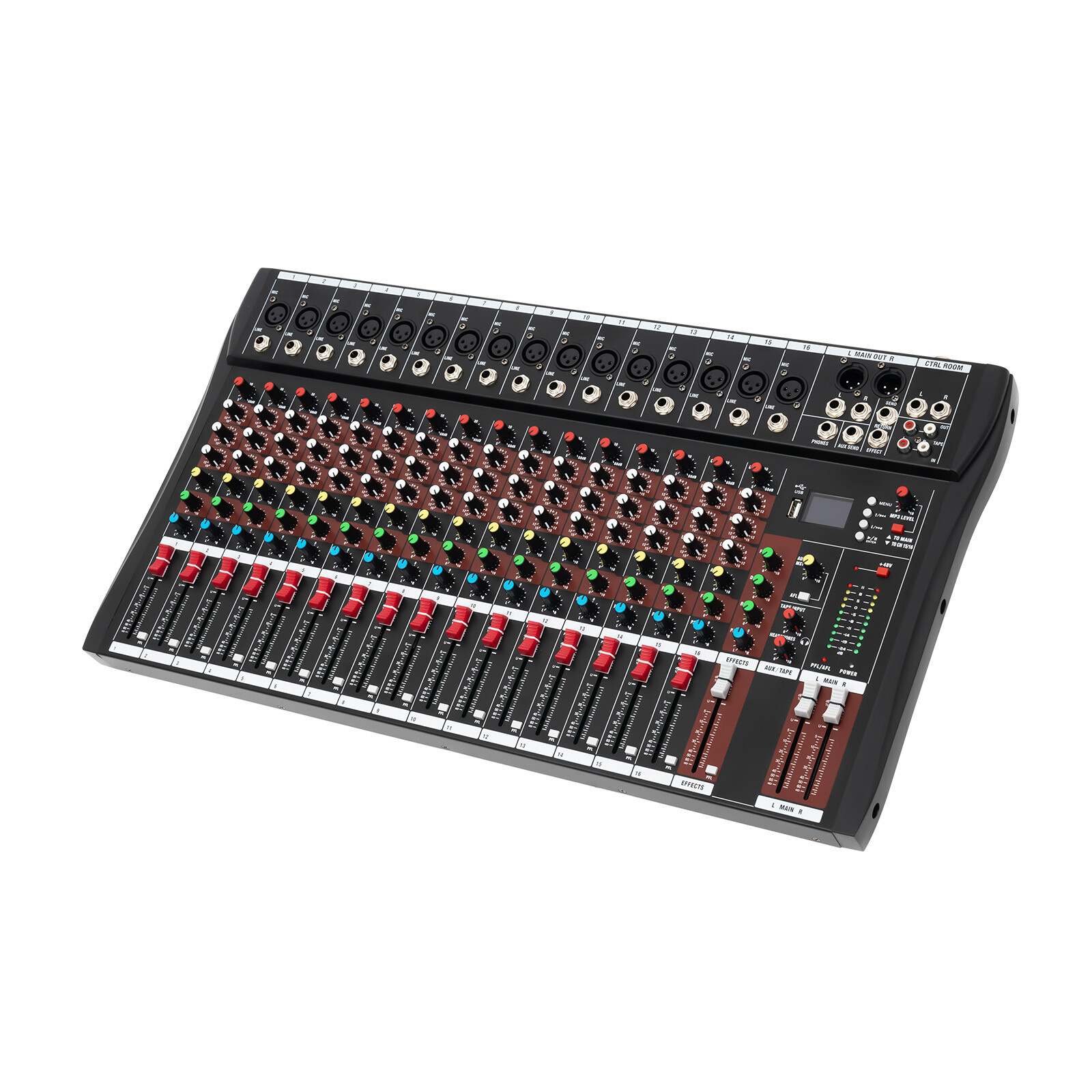
This top-priced listing puts the emphasis on a three-band equalizer on the main channel, a high-quality metal and powder-coated surface, and vocals that blend more naturally. It also calls out 16 tracks, Bluetooth, USB, and a crosstalk figure above 85dB. If you like descriptions that explain why the controls work the way they do, this one gives you that context. The limitation is the top listed price: you are paying the same amount as the other top-priced entry, and the attributes are worded more generally, with less of the technical tone found in the spec-focused entry.
16 Channel Studio Audio Mixer - feature-focused entry at the top price (second)
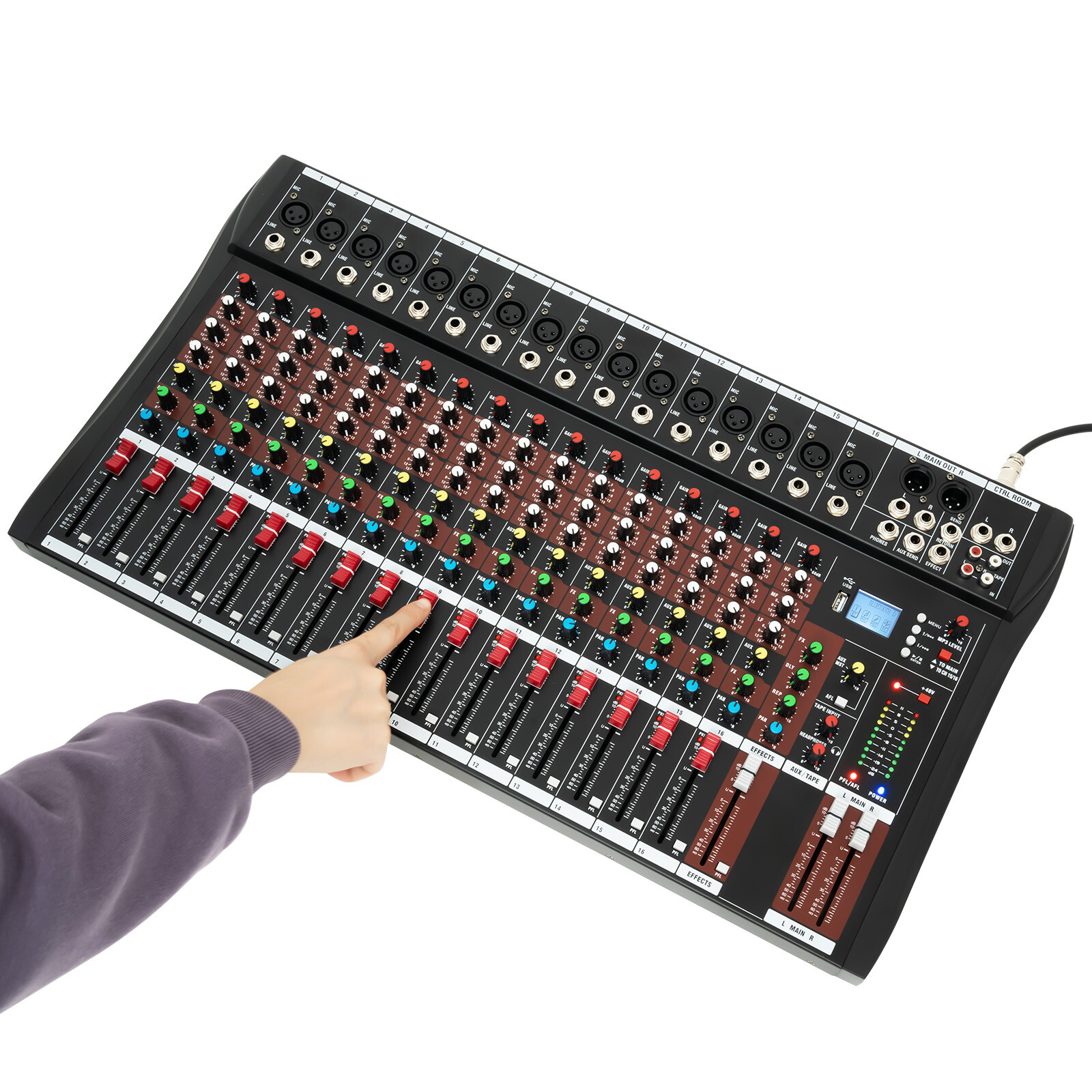
The second entry at the top listed price uses the same powder-coating and EQ description as the first top-priced entry, but its attributes add metal+plastic as the construction material and list the frequency response as 20Hz-30kHz ±0.5dB. That material note is the concrete difference between the two top-priced options. The limitation is that you are paying the same top listed price even though the channel count and Bluetooth/USB connectivity are the same as the other entries.
16 Channel Studio Audio Mixer - middle-priced feature-focused entry
This entry sits between the lowest and highest listed prices. It uses the same powder-coating and tone-shaping description as the top-priced entries, but the listed price is closer to the low end. The attributes include new condition, 16 channels, and a crosstalk figure above 85dB, along with easy operation and easy installation wording. If you want the feature-story version without paying the full top price, this is the middle path. The description leans on the feature story more than on the input-level and noise numbers, so the technical depth is not the focus here.
Final recommendation by use case
- For a spec-first buyer: the spec-focused entry is the place to start because it has the most concrete technical details and the lowest listed price.
- For a feature-first buyer who wants a moderate price: the middle-priced entry gives you the three-band EQ description without the top price.
- For a feature-first buyer who is fine with the top listed price: either top-priced entry works; if you want an explicit material note, choose the one that lists
metal+plastic.