Deciding on a training reference in the HVAC electrical trades usually comes down to one question: will this book actually help me on the job? You want something that explains fundamentals clearly enough to use in the field, without costing more than it's worth. HVAC Basic for Contractors, published by Pearson, is one such option worth examining closely.
Quick verdict
HVAC Basic for Contractors is a revised textbook by NCCER, focused on Construction / Heating, Ventilation & Air Conditioning. At USD 115.00, it offers a single structured reference for reviewing HVAC basics, with an English-language text and U.S. origin. It deserves consideration if you need a contractor-level foundation and want a clean, brand-new copy to read and annotate. If you already have a deep library of specialized manuals, this book is best used as a refresh, not as your only resource.
Who it suits
This book fits apprentices entering the construction HVAC field, technicians who want a structured review of core concepts, and contractors who prefer a printed reference over scattered online files. Because it comes from NCCER and is published by Pearson, the content sits within a formal vocational training framework-helpful if you're working through a structured skill-building plan. The U.S. origin and English language make it a natural match for professionals working in an American context.
What stands out from the listed details
The title itself sets the scope: it's "Basic," so the material is positioned at a foundational level for contractor work. The book falls under the subject area of Technology & Engineering, with a subject listing of Construction / Heating, Ventilation & Air Conditioning. That positions it squarely within the contractor side of the industry.
HVAC Basic for Contractors
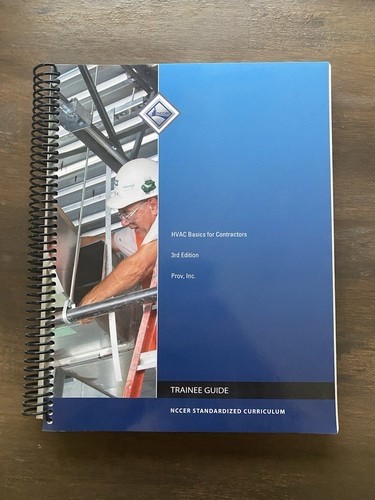
The revised edition gives you an updated treatment from NCCER, and the concrete reason to choose it is having a formal educational text produced under the Pearson name. The limitation to keep in mind is that it's ultimately a textbook: applying the material to your local codes, equipment, and job conditions is still up to you.
Meaningful trade-offs
The main trade-off is breadth versus depth. You're getting one contractor-level overview, not a set of separate manuals. If you're new to the field, that breadth is an advantage because it helps you see how the pieces fit together. If you're an experienced contractor facing a complex installation, you'll likely need to turn to manufacturer specifications and local code references for the particulars. The "Basic" framing also means you should set your expectations for an introductory-to-intermediate level, which is exactly what the title advertises.
Bottom line
HVAC Basic for Contractors is a sensible purchase for anyone in the HVAC electrical trades who wants a single textbook from NCCER and Pearson to build or refresh fundamental knowledge. At USD 115.00, it's a straightforward investment in a brand-new copy of the book. Choose it for the structured foundation, and keep your project-specific materials close by for the rest.