Choosing a technical reference for machining CAD manufacturing often comes down to a practical question: will this book close the gap between design, process planning, and machining work? *Integration of CAD/CAPP/CAM*, edited by Jianbin Xue, aims to walk through exactly that bridge. But a 186-page paperback at USD 73.67 is a meaningful investment, so let's weigh what this title actually offers.
Quick verdict: If your daily work involves moving models from CAD into CAPP and then into CAM, this book gives a structured, academic overview of how those systems connect. It suits engineers, manufacturing planners, and students who want a broad conceptual grounding rather than software-specific tutorials. The trade-off is the length: 186 pages cannot dive deeply into every stage, and the price reflects a specialized technical publisher.
Who it suits: The book is written in English and published by De Gruyter, which positions it as a technical reference. It is most useful for someone who already understands basic machining and wants to see how the software layers link logically. If you are new to CAD/CAM entirely, you may need a more introductory hands-on text.
What stands out from the confirmed details: This paperback has 186 pages, dimensions of 9.61 x 6.69 inches, and a weight of 13.1 ounces. The ISBN is 9783110573084. The dimensions make it a standard-sized reference that fits alongside other engineering books. The focus on integration rather than a single CAD package is valuable because real machining workflows rarely live inside one tool. You are not getting vendor-specific shortcuts; you are getting a systems-level view of how design, process planning, and manufacturing connect.
Meaningful trade-offs: The most obvious limitation is the page count. At 186 pages, the book cannot possibly cover all the nuances of CAD, CAPP, and CAM individually, and it is likely to favor architecture and data flow over detailed operations. The title concentrates on integration concepts, so a buyer expecting detailed commands in one specific CAD package will be better served by a dedicated software manual. The price is also worth considering: USD 73.67 is a notable outlay for a specialized paperback, even if the publisher and scope justify it for a professional audience.
Bottom line: *Integration of CAD/CAPP/CAM* is a focused reference for machining professionals who want a clear, editor-led explanation of how design, process planning, and manufacturing systems fit together. It will not replace vendor documentation, but it offers a coherent bridge between disciplines. If your role requires you to translate engineering designs into manufacturable machining steps, this paperback earns a place on your desk. If you prefer a software-specific manual or a shorter overview, you would likely be better served elsewhere.
Integration of CAD/CAPP/CAM
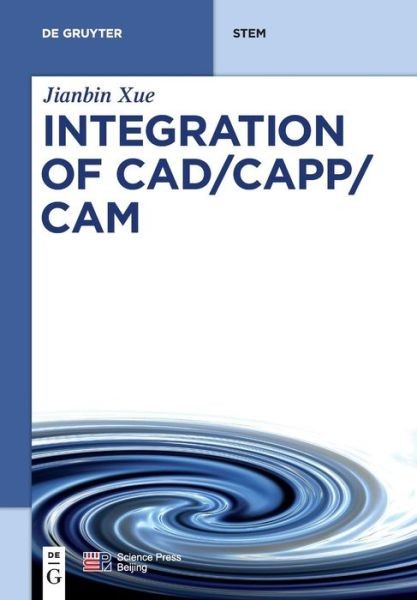
At the center of this review is the paperback itself. The title is direct about its mission: treating CAD, CAPP, and CAM as one continuous workflow, which is exactly the perspective missing from many single-tool guides. One concrete reason to choose it is that it looks at the entire process chain rather than isolating one step. A concrete limitation is that the book's 186 pages set a boundary around how much depth each stage can receive, so you will likely need supplementary materials when you move into implementation.