Choosing among programming IT courses often comes down to focus: do you want broad programming instruction, or a substantial text dedicated to one area of game development? *Physics Modeling for Game Programmers* is aimed at readers who want computer graphics, general programming, and game programming coverage with a clear emphasis on physics modeling. Its length, format, and publication date are the main factors to weigh before choosing it.
Quick verdict
At USD 19.05, *Physics Modeling for Game Programmers* is a focused textbook choice for shoppers who want a comprehensive resource rather than a short lesson. The subject emphasis is clear, and the coverage reaches beyond physics modeling into computer graphics and general programming.
The main limitation is its 2004 publication date. That may be perfectly suitable for readers studying the subject through a dedicated textbook, but shoppers specifically seeking newer course material should treat the publication date as an important trade-off.
Who it suits
This book is a good match for:
- Game programmers who specifically want to study physics modeling.
- Learners who prefer a textbook combining computer graphics, general programming, and game programming.
- Readers comfortable with a substantial English-language trade paperback.
It is less suited to someone looking for a brief, narrowly scoped lesson or a digital-first learning format.
What stands out from the listed details
The strongest point is the combination of breadth and focus. The book is described as a comprehensive textbook, but its central subject remains physics modeling for game programming. That gives it a more defined purpose than a general programming title while still connecting the topic to related computer subjects.
Its 544 pages provide room for an extended treatment of the subject. The book is written by J. Robert Ellis and David Conger, published by Course Technology, and presented in English as a trade paperback. Those details make its role clear: this is a book-length study resource for readers willing to spend time with the topic.
Meaningful trade-offs
Depth versus speed: A 544-page textbook requires a longer reading commitment than a short course lesson. That is a reason to choose it if you want a substantial reference, but a limitation if you prefer quick, narrowly targeted instruction.
Format: The trade paperback format suits shoppers who like studying from a physical book. It may be a weaker fit for readers whose preferred learning method is digital.
Publication date: Because it was published in 2004, the book is a better match for shoppers prioritizing dedicated coverage of physics modeling than for those whose main requirement is newer course content.
Product note
Physics Modeling for Game Programmers
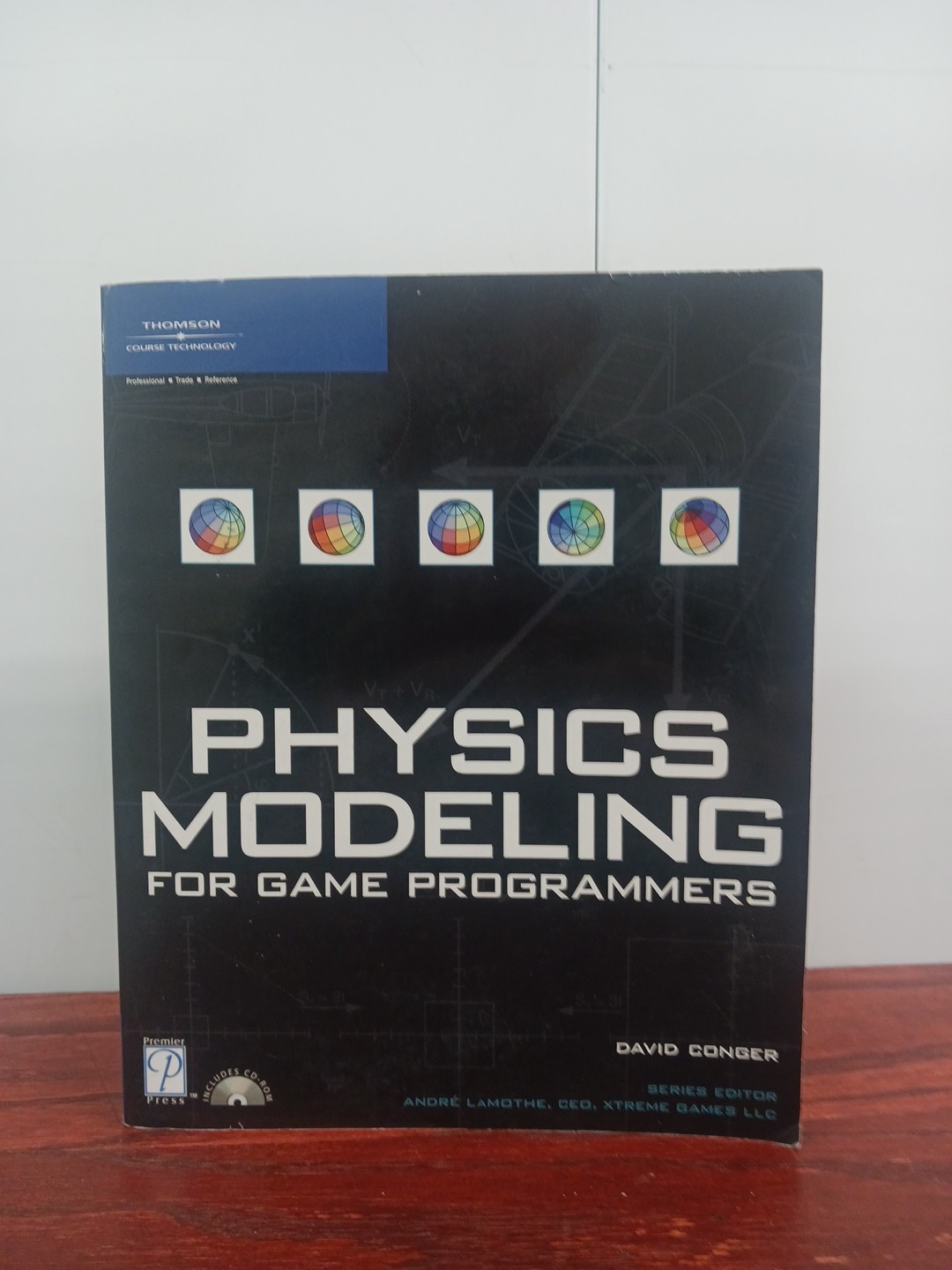
Choose this book when the phrase "physics modeling" describes the main reason you are shopping and the added coverage of computer graphics, general programming, and game programming fits your learning plan. Its concrete limitation is the 2004 publication date, which matters for readers who place a high priority on newer material. The Very Good condition and trade paperback format further describe the listed edition.
Bottom line
For programming IT courses, *Physics Modeling for Game Programmers* is a clear choice when you want a substantial textbook centered on physics modeling within game programming. At USD 19.05, it offers a defined subject focus and broad supporting coverage. Choose it for that dedicated textbook approach; pass on it if a newer publication or shorter format is more important to you.